Evaluating Goda: A Bold Display Font for High-Impact Visual Design
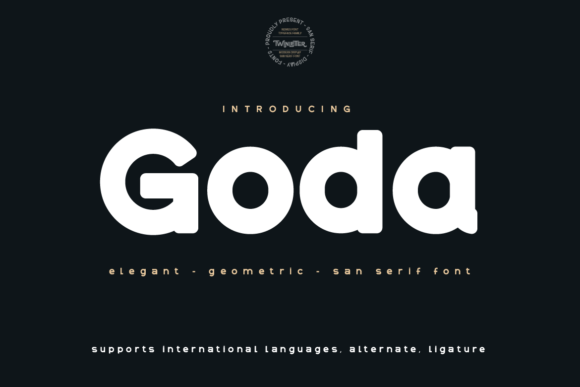
In the landscape of digital and print typography, selecting the right typeface is rarely just about readability; it is often about establishing an immediate emotional connection. For designers seeking a font that commands attention without sacrificing structural integrity, Goda has emerged as a compelling option. Characterized by its bold weight, thick letterforms, and distinctively cool aesthetic, Goda is engineered to make visual creations stand out. It occupies a specific niche in the display font category, offering a balance of aggression and polish that appeals to modern branding needs.
However, choosing a typeface requires more than just appreciating its visual appeal. It demands an understanding of where this font fits within broader design contexts, how it compares to other heavy-weight display options, and what trade-offs come with its distinctive style. This evaluation explores the functional and aesthetic attributes of Goda, helping professionals determine if it aligns with their project requirements.
The Core Identity of Goda
Goda is defined primarily by its presence. It is not a subtle font designed to recede into the background of body text. Instead, it is a display font, intended for headlines, logos, posters, and large-scale graphics. The term "bold" in typography usually refers to weight, but with Goda, boldness is also a stylistic choice. The letters are constructed with substantial thickness, creating a solid block of ink that feels dense and authoritative.
What makes Goda distinct from other heavy fonts is its "cool" factor—a subjective quality achieved through precise geometric construction and balanced proportions. While some thick fonts can feel clunky or outdated, Goda maintains a contemporary edge. Its curves are smooth yet firm, and its terminals (the ends of strokes) are treated with a consistency that suggests professional craftsmanship. This design philosophy ensures that the font looks intentional rather than accidental, which is crucial for high-stakes branding projects.
The font’s ability to look "out of this world," as often described in its promotional materials, stems from its slight futuristic undertones. It avoids the harshness of purely mechanical sans-serifs while retaining enough rigidity to convey stability. This duality allows it to work well in industries ranging from technology and gaming to fashion and entertainment, where a strong visual identity is paramount.
Comparing Goda to Alternative Display Styles
When evaluating Goda, it is helpful to place it in conversation with other categories of display typography. Understanding these distinctions clarifies why a designer might choose Goda over a standard Helvetica Black, a decorative script, or a distressed grunge font.
Goda vs. Standard Heavy Sans-Serifs
Standard heavy sans-serif fonts, such as Arial Black or Futura ExtraBold, are workhorses of the design world. They are versatile, widely available, and generally safe. However, they often lack personality. Goda differentiates itself by offering a higher degree of stylistic flair. Where a standard sans-serif aims for neutrality, Goda aims for impact. If a project requires a message to be read quickly without distraction, a standard heavy sans-serif may be more appropriate. But if the goal is to create a memorable brand mark or a poster that stops viewers in their tracks, Goda’s unique character provides a competitive advantage.
Goda vs. Decorative or Novelty Fonts
On the other end of the spectrum are novelty fonts that prioritize gimmickry over function. These fonts often have irregular shapes, excessive ornamentation, or limited character sets. Goda sits firmly between utility and artistry. Unlike novelty fonts, Goda offers a robust character set suitable for various typographic treatments. It does not rely on quirks to be interesting; its interest comes from its confident execution. This makes Goda a safer choice for long-term branding, as it is less likely to feel dated or overly trendy in a few years.
Goda vs. Hand-Drawn or Organic Displays
Organic display fonts mimic handwriting or natural textures, conveying warmth and approachability. Goda, by contrast, feels manufactured and precise. This makes it better suited for contexts requiring clarity, strength, and modernity. For a bakery or a craft brand, a hand-drawn font might be the right fit. For a tech startup, a sports team, or a music festival, Goda’s sharp, bold lines communicate energy and precision more effectively.
Strengths and Practical Applications
The strengths of Goda lie in its versatility within the display category and its legibility at scale. Because of its thick letterforms, it remains readable even when viewed from a distance or reproduced on lower-resolution media. This makes it particularly effective for:
- Event Posters and Flyers: The bold weight ensures that event names and dates grab attention immediately, even in cluttered visual environments.
- Logo Design: Goda’s clean lines and strong structure provide a solid foundation for logo marks. It works well alone or paired with thinner, more delicate fonts to create contrast.
- Social Media Graphics: In the fast-scrolling environment of social media, bold typography cuts through the noise. Goda’s aesthetic is modern enough to fit seamlessly into Instagram stories or YouTube thumbnails.
- Product Packaging: For products that want to convey premium quality or excitement, Goda adds a layer of visual weight that suggests substance and value.
One practical advantage of Goda is its ability to hold up under stress. When scaled down, many thin or intricate fonts become illegible. Goda’s thickness protects its form, ensuring that the core identity of the typeface remains intact even in smaller sizes, provided it is still used as a display element rather than body copy.
Limitations and Decision Factors
No single font is a universal solution, and Goda is no exception. Its very strengths can become limitations depending on the context. Recognizing these trade-offs is essential for making an informed decision.
Legibility in Body Text
As with most bold display fonts, Goda is not suitable for long-form reading. Using it for paragraphs of text would cause eye strain and reduce comprehension. Designers must pair Goda with a highly legible serif or sans-serif font for body content. The contrast between Goda’s boldness and a lighter body font creates a hierarchy that guides the reader’s eye effectively.
Tone and Industry Fit
Goda carries a tone of confidence and assertiveness. This may not be appropriate for all brands. For organizations focused on softness, tradition, or subtlety—such as healthcare providers, legal firms, or heritage brands—Goda might feel too aggressive or loud. In these cases, a more restrained typeface would better reflect the desired brand values.
Kerning and Spacing Requirements
Bold fonts often require careful attention to spacing. Because the letters are thick, they take up more visual space, and tight tracking (letter-spacing) can cause the characters to merge, reducing readability. Designers using Goda must be willing to invest time in adjusting kerning pairs and overall spacing to ensure the text breathes properly. This is a common requirement for any custom typography but is particularly noticeable with heavy weights.
When to Choose Goda
The decision to use Goda should be driven by the specific goals of the project. It is the right choice when:
- Impact is the Priority: If the primary goal is to be seen and remembered, Goda’s bold presence delivers.
- Modern Aesthetics are Desired: For projects that need to feel current, sleek, and professional, Goda’s clean geometry fits well.
- Contrast is Needed: When designing layouts that require a strong anchor point, Goda provides a visual weight that balances lighter elements.
- Brand Personality is Bold: If the brand voice is direct, energetic, or innovative, Goda visually reinforces those traits.
Conversely, readers should consider alternative options when:
- Readability is Paramount: For dense information or technical documentation, a neutral, highly legible font is superior.
- Subtlety is Required: If the design needs to support content without dominating it, a lighter weight or simpler font is better.
- Warmth and Tradition are Key: For brands aiming for a classic or humanistic feel, organic or serif typefaces may be more appropriate.
Conclusion
Goda stands out as a thoughtful entry in the market for bold display fonts. It successfully combines thickness with a refined, modern aesthetic, making it a powerful tool for designers who need to communicate strength and clarity. While it is not a one-size-fits-all solution, its specific strengths make it an excellent choice for projects where visual impact and contemporary style are critical. By understanding its limitations and comparing it carefully against other typographic approaches, designers can leverage Goda to create work that is not only beautiful but also strategically effective.