Why Hashiba Is the Secret Weapon for Bold, Japanese-Inspired Design
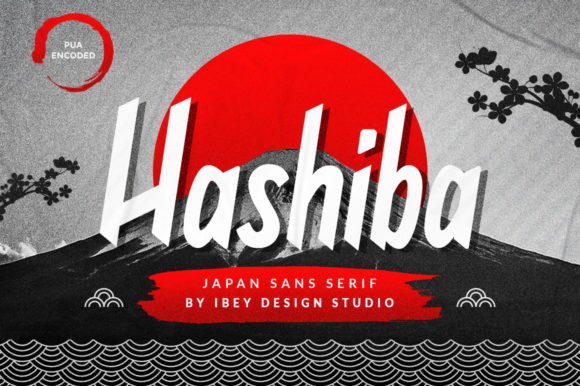
When you are staring at a blank canvas, trying to convey a specific mood before a single word is written, the choice of typography can feel like a heavy burden. You want something that commands attention but doesn’t scream for it. You want character, history, and a touch of the exotic without veering into caricature. This is where Hashiba steps in. It isn’t just another display font; it is a visual statement that brings the raw energy and aesthetic precision of Japanese design directly into your project.
If you have been scrolling through design portfolios or browsing print shops lately, you might have noticed a surge in interest for typefaces that mimic brush strokes, ink washes, and traditional calligraphy. But unlike fonts that try too hard to look "authentic" by adding unnecessary noise, Hashiba strikes a balance. It captures the essence of Japanese-inspired aesthetics—clean lines mixed with organic, hand-drawn flair—making it incredibly versatile for modern commercial use.
The Power of First Impressions on Menus and Packaging
Let’s talk about the most immediate impact this font has: the dining experience. Whether you are running a high-end sushi bar, a casual ramen shop, or a fusion bistro, your menu is often the first piece of communication a customer engages with. Standard serif or sans-serif fonts can sometimes feel sterile in these environments. They lack warmth. They lack soul.
Hashiba changes that dynamic instantly. Its brush-like qualities evoke the feeling of a chef’s hand writing out daily specials. When used for headings like "Appetizers," "Signature Dishes," or even individual item names, it adds a layer of artisanal credibility. Customers subconsciously associate that hand-crafted look with food that is made with care, not churned out by a machine. Imagine a flyer for a new sake tasting event or a poster for a local Izakaya night. The text doesn't just inform; it invites. It sets a scene.
This effect extends beyond restaurants to product packaging. If you are designing labels for hot sauce, craft beer, or specialty coffee, Hashiba provides that edge-of-seat excitement. It suggests adventure and bold flavor profiles. A bottle of spicy miso paste or a bag of single-origin beans looks significantly more premium when wrapped in typography that feels tactile and grounded.
Event Marketing and Poster Design
Moving away from food, let’s consider the world of events. Concerts, art exhibitions, cultural festivals, and street fairs all rely on posters to grab passersby by the collar. In a city saturated with digital ads and static billboards, physical print needs to pop. Hashiba is engineered for exactly this purpose. Its display nature means it works best in larger sizes, where every stroke of the letterform can be appreciated.
Think about a flyer for a jazz club night with a Japanese influence, or perhaps a summer festival celebrating Asian cinema. Using Hashiba for the main title creates an immediate thematic link. It tells the audience what kind of vibe to expect before they even read the date or location. The font’s slight irregularities prevent it from looking too rigid, which is crucial for creative industries that value individuality over corporate uniformity.
However, there is a nuance here. Because Hashiba is a display font, it demands space. It thrives when it is allowed to breathe. Overcrowding it with dense blocks of body text will kill its impact. The trick is to use it as an anchor. Let the headline shout, and let the supporting information whisper in a clean, neutral sans-serif. This contrast creates a hierarchy that guides the eye naturally through the information.
Beyond the Obvious: Unexpected Applications
One of the most exciting aspects of working with Hashiba is discovering applications you hadn’t initially considered. While food and events are the obvious homes for this typeface, its versatility allows it to slip into other niches seamlessly.
- Fashion and Streetwear: Brands that lean into urban culture or avant-garde aesthetics often use Japanese motifs. Hashiba fits perfectly into t-shirt graphics, hang tags, and lookbooks. It bridges the gap between traditional craftsmanship and modern street style.
- Tech and Gaming: In the gaming industry, particularly for titles involving samurai, ninja, or historical fantasy themes, Hashiba can serve as a powerful UI element or promotional asset. It conveys action and heritage simultaneously.
- Personal Branding: For freelancers, artists, or consultants who want to project a creative yet disciplined image, using Hashiba in a logo or business card header can set them apart. It signals that they pay attention to detail and appreciate cultural depth.
Navigating Practical Considerations
Before you drag and drop Hashiba into your next project, it is wise to pause and consider how it will function in the real world. Fonts are tools, and like any tool, they have specific strengths and limitations.
The primary limitation of any display font like Hashiba is readability at small scales. Do not attempt to use it for long paragraphs of text. It is designed to be read quickly, to make a point, not to sustain a narrative. If you need to explain complex details, stick to a highly legible body font. Think of Hashiba as the loudspeaker and your body font as the conversation.
Another consideration is color contrast. Because Hashiba often features varying stroke weights (thick and thin lines), it relies heavily on contrast to remain clear. On a busy background, the thinner strokes might get lost. Ensure your background is simple enough to let the font shine. Black on white, or deep navy on cream, are classic combinations that highlight the font’s structure without distraction.
You should also think about pairing. Since Hashiba has such a strong personality, it can easily overpower other elements. Choose complementary fonts wisely. A minimalist geometric sans-serif or a classic humanist serif usually works best because they don't compete for attention. They provide a stable foundation that allows Hashiba to take center stage.
Embracing the Creative Possibilities
Ultimately, choosing a font is an act of storytelling. When you select Hashiba, you are telling your audience that you value tradition but are not afraid to present it in a contemporary way. You are signaling that your brand or project has depth, texture, and a connection to something larger than itself.
In a market where everything looks the same, standing out requires risk. It requires stepping outside the safe zones of Arial or Helvetica. Hashiba offers that opportunity. It is cool, it is distinctive, and it is ready to transform your designs from ordinary to unforgettable. Whether you are printing flyers for a weekend workshop or redesigning the entire identity of a restaurant, exploring the endless possibilities of this font is a move worth making. Give your design the voice it deserves—one that speaks loudly, elegantly, and with unmistakable style.