Dyans: The Bold Statement of Vintage Typography in Modern Design
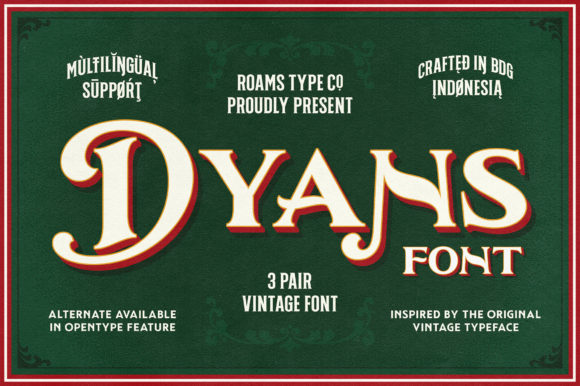
In an era where digital interfaces are dominated by clean, minimalist sans-serif typefaces and highly legible geometric fonts, there is a growing counter-movement that values character, weight, and historical resonance. This shift is not merely about nostalgia; it is about cutting through the noise. At the forefront of this typographic resurgence is Dyans, a display font defined by its bold, thick lettering and distinct vintage styling. For designers, brand managers, and creative professionals, Dyans represents more than just a typeface—it is a tool for creating immediate visual impact and establishing a strong, memorable identity.
The relevance of Dyans lies in its ability to command attention without requiring complex graphic elements. In a marketplace saturated with content, the typography itself often serves as the primary hook. Dyans achieves this through sheer presence. Its heavy strokes and retro aesthetic evoke a sense of authority and timelessness, making it an ideal choice for projects that need to stand out on posters, labels, apparel, and branding materials. This article explores why bold, vintage-styled display fonts like Dyans are gaining traction, how they fit into contemporary design workflows, and practical ways to leverage their unique characteristics.
The Rise of Bold, Thick Lettering in Visual Communication
Historically, typography has cycled between periods of ornate complexity and stark minimalism. We have recently seen a significant pivot toward the latter, driven by the needs of mobile-first design and accessibility standards. However, as screens become more crowded, there is a fatigue associated with the "corporate Memphis" style of illustration and the ubiquitous use of neutral, safe typefaces. Enter the return of the display font—specifically those with high contrast and substantial weight.
Dyans exemplifies this trend. Its thick lettering is not just a stylistic choice but a functional one. In a world where users scroll rapidly through social feeds or skim websites, bold text acts as a visual anchor. It slows the eye down and forces engagement. When used correctly, a font like Dyans can convey mood and message before the viewer even reads the accompanying copy. This is particularly effective in branding, where the goal is instant recognition. A logo set in a thin, delicate script may feel elegant, but one set in a bold, vintage-style face like Dyans feels established, confident, and rugged.
Why Vintage Styles Are Resonating Now
The appeal of vintage aesthetics in modern design is multifaceted. For many consumers, vintage styles evoke authenticity, craftsmanship, and trust. In an age of AI-generated content and mass-produced digital assets, hand-crafted or historically rooted design elements offer a sense of human connection. Dyans taps into this desire by referencing mid-20th-century advertising and industrial labeling. These eras were characterized by bold claims, vibrant colors, and clear communication—all qualities that resonate with today’s direct-to-consumer brands and independent creators.
Furthermore, the "retro-futurism" and "Y2K" aesthetics that have permeated fashion and digital culture have opened the door for varied interpretations of the past. Dyans does not strictly adhere to one specific decade but rather channels the general vibe of classic Americana and European printmaking. This versatility allows it to be adapted for various contexts, from craft beer labels to tech startup logos, provided the surrounding design elements support its bold nature.
Practical Applications for Creators and Businesses
Understanding the theoretical appeal of Dyans is one thing; applying it effectively is another. Because it is a display font, it is not intended for long-form body text. Its strength lies in headlines, titles, and short phrases. Here is how different professional groups can integrate Dyans into their workflows to maximize impact.
Branding and Identity Design
For entrepreneurs and business owners, establishing a distinctive brand voice is crucial. Dyans offers a way to inject personality into a logo or wordmark. Imagine a coffee roaster using Dyans for their brand name—the thick letters suggest robust flavor and traditional brewing methods. Similarly, a construction firm or a hardware store might use Dyans to communicate durability and reliability. The key here is pairing. Since Dyans is visually dominant, it should be paired with simpler, cleaner secondary fonts to create balance. A combination of Dyans for the headline and a neutral sans-serif for supporting details creates a hierarchy that guides the viewer’s eye effectively.
Apparel and Merchandise
The fashion industry has long relied on typography as a central design element. T-shirts, hoodies, and tote bags serve as walking billboards for personal expression and brand loyalty. Dyans’ thick lettering translates exceptionally well to screen printing and embroidery. The bold lines ensure that the text remains legible even when scaled up or printed on textured fabrics. Moreover, the vintage style aligns perfectly with current trends in streetwear and casual wear, which often draw inspiration from archival graphics and sportswear aesthetics. Brands looking to launch merchandise lines will find that Dyans provides a ready-made aesthetic that appeals to a broad demographic.
Event Posters and Digital Marketing
In the realm of events, whether it’s a music festival, a local market, or a corporate webinar, the poster is the first point of contact. Dyans is ideally suited for large-format printing. Its high contrast ensures visibility from a distance, while its unique character adds artistic flair that standard fonts lack. For digital marketers, using Dyans in social media banners or email headers can increase click-through rates by breaking the monotony of typical web layouts. However, care must be taken with digital rendering; ensuring that the anti-aliasing is correct prevents the thick strokes from appearing muddy on lower-resolution screens.
Technical Considerations and Best Practices
While Dyans is a powerful tool, it requires respect and careful handling to avoid common pitfalls. Display fonts are inherently dramatic, and overuse can lead to visual clutter. Here are some essential guidelines for working with Dyans and similar typefaces.
- Limit Usage: Reserve Dyans for headlines and short text blocks. Never use it for paragraphs or fine print. The thickness of the letters reduces readability at small sizes.
- White Space is Your Friend: Because Dyans has a heavy visual weight, it needs room to breathe. Surrounding the text with ample negative space enhances its impact and prevents the design from feeling cramped.
- Color Contrast: To maintain legibility, ensure high contrast between the text color and the background. Dark text on a light background or vice versa works best. Avoid subtle gradients or low-contrast pairings that might obscure the letterforms.
- Kerning and Tracking: Pay close attention to spacing. Thick letters can easily collide or look disjointed if not spaced properly. Adjust kerning pairs manually if necessary, especially for words with diagonal strokes that might clash vertically.
Pairing Strategies
One of the most effective ways to use Dyans is to let it shine by contrasting it with understated typography. A classic approach is to pair it with a modern geometric sans-serif or a simple serif. This juxtaposition highlights the unique qualities of Dyans while providing a stable foundation for informational text. For example, a restaurant menu might use Dyans for section headers like "Starters" or "Mains," while using a clean, easy-to-read font for the descriptions. This creates a sophisticated yet approachable aesthetic.
The Future of Distinctive Typography
As design tools become more accessible and AI-assisted generation becomes commonplace, the value of unique, human-curated typography increases. Generic templates and default system fonts are losing their power to differentiate. Brands and creators are increasingly turning to custom or distinctive display fonts like Dyans to carve out a niche. This trend is likely to continue as audiences become more discerning and seek out authentic, crafted experiences.
Moreover, the integration of typography into 3D environments and augmented reality presents new opportunities for bold fonts. Dyans’ structural integrity and clear forms make it adaptable to these emerging mediums, where depth and dimension add another layer of engagement. Whether viewed on a flat screen or in a spatial environment, the boldness of Dyans ensures it remains a focal point.
Conclusion
Dyans is more than just a font; it is a statement. In a landscape filled with uniformity, its bold, thick, and vintage-styled characters offer a refreshing alternative. For professionals across industries—from marketing to apparel design—understanding how to harness the power of such distinctive typefaces is essential. By respecting its limitations and leveraging its strengths, creators can produce work that is not only visually striking but also emotionally resonant. As we move forward, the demand for typography with character and history will only grow, making fonts like Dyans indispensable assets in the designer’s toolkit.