Evaluating Goflow: A Strategic Look at Thin Display Typography for Modern Design
In the landscape of digital and print design, typography serves as the foundational voice of a brand. It communicates tone, hierarchy, and personality before a single word is read. Among the myriad of typefaces available to designers and developers, Goflow has emerged as a distinctive option for those seeking a specific aesthetic: one that is cool, thin, and highly legible in display contexts. This article provides a detailed evaluation of Goflow, examining its visual characteristics, ideal use cases, and how it compares to broader typographic strategies.
Understanding the Visual Identity of Goflow
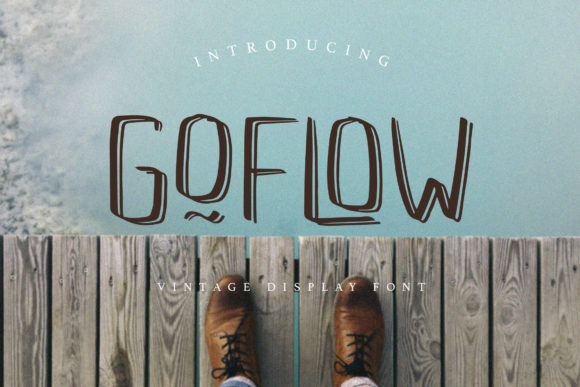
Goflow is classified primarily as a display font. Unlike text fonts, which are engineered for long-form readability with tight spacing and moderate contrast, display fonts are designed to capture attention at larger sizes. Goflow distinguishes itself through its thin letterforms and a sleek, modern geometric structure. The "cool" descriptor often associated with this typeface refers to its minimalist, almost futuristic feel, achieved through clean lines and reduced visual weight.
The defining characteristic of Goflow is its stroke weight. In a market saturated with bold, heavy sans-serifs that dominate headlines, Goflow offers an elegant counterpoint. Its thinness creates a sense of sophistication and airy spaciousness. However, this aesthetic choice introduces specific technical considerations regarding legibility and scalability, which must be weighed carefully during the selection process.
The Role of Negative Space
Because Goflow relies on thin strokes, it utilizes negative space aggressively. This means that the gaps between letters and within the characters themselves are more pronounced than in standard fonts. For web designs and large-format prints, this can create a premium, high-end look. The eye is drawn to the overall shape and rhythm of the word rather than the density of the ink. This makes it particularly effective for branding elements where uniqueness is prioritized over rapid information consumption.
Ideal Use Cases for Goflow
Determining whether Goflow is the right tool for a project requires understanding where its strengths align with design goals. It is not a universal solution but a specialized instrument for specific scenarios.
Web Design and Hero Sections
In web design, first impressions are critical. Goflow excels in hero sections, landing page headers, and navigation menus where the text size is sufficiently large to maintain clarity. When used for main headings, the thin lines convey a sense of lightness and modernity that resonates well with tech startups, fashion brands, and architectural firms. The font’s ability to stand out without shouting allows for a more subtle, refined user experience.
Business Cards and Stationery
Physical collateral such as business cards benefits greatly from the tactile and visual appeal of Goflow. On paper, the thin lines can be printed sharply, creating a delicate contrast against the texture of the card stock. Because business cards are viewed up close, the intricate details of the letterforms become apparent. Using Goflow for names or titles on these items adds a layer of exclusivity and careful craftsmanship that heavier fonts might obscure.
Branding and Logo Design
For brands seeking a unique touch, Goflow offers a distinct identity. Its unusual thickness sets it apart from the ubiquitous Helvetica or Arial derivatives found everywhere else. When integrated into a logo or brand guideline, Goflow signals innovation and precision. It works best when paired with simpler supporting elements, allowing the typography to remain the focal point.
Comparative Analysis: Goflow vs. Standard Display Options
When evaluating typography, designers often compare options based on versatility, impact, and compatibility. Here, we explore how Goflow stacks up against common alternatives.
Thin Fonts vs. Bold Sans-Serifs
Bold sans-serif fonts (such as Futura or Montserrat) are the industry standard for visibility. They command attention and ensure readability even from a distance. Goflow, by contrast, trades raw volume for elegance. While a bold font might grab attention through dominance, Goflow attracts interest through refinement. The tradeoff is clear: Goflow may lose impact in low-resolution environments or when scaled down too small, whereas bold fonts retain their presence across various media.
Decorative Fonts vs. Geometric Minimals
Some display fonts rely on ornate details, serifs, or irregular shapes to stand out. These can feel dated or overly busy. Goflow belongs to the geometric minimalism category. Its strength lies in its simplicity. In a crowded visual field, a clean, thin line often cuts through noise more effectively than a complex decorative shape. This makes Goflow a safer, more timeless choice for contemporary projects compared to trend-driven decorative fonts.
Variable Fonts and Static Weights
Modern web development increasingly favors variable fonts, which allow for continuous adjustment of weight and width. Goflow, depending on its specific implementation, may offer static weights. If flexibility is a priority, designers must consider whether the fixed nature of Goflow limits its adaptability across different screen sizes. However, if the goal is a consistent, unchanging brand voice, the static nature ensures uniformity.
Tradeoffs and Limitations
No font is perfect, and Goflow presents specific challenges that designers must anticipate.
- Legibility at Small Sizes: Due to its thin strokes, Goflow struggles in body text or small captions. It can become difficult to read on mobile devices or low-DPI screens. It should never be used for paragraphs or lengthy content.
- Reproduction Challenges: In print, very thin lines can break or fill in if the printing process is not precise. Offset printing or cheap digital copies may result in muddy edges, losing the crispness that defines the font’s appeal.
- Accessibility Concerns: Accessibility standards often recommend higher contrast and thicker strokes for readability, particularly for users with visual impairments. Relying solely on Goflow for critical information may hinder accessibility compliance.
Decision Factors: When to Choose Goflow
Selecting Goflow should be a deliberate decision based on the following criteria:
- Brand Personality: Does your brand value sophistication, minimalism, and modernity? If so, Goflow aligns well with these values.
- Context of Use: Is the text going to be displayed at a size where thin lines remain distinct? Ensure that the medium supports fine detail.
- Visual Hierarchy: Are you using Goflow as a primary display element rather than a secondary informational text?
- Contrast Needs: Can you pair Goflow with a strong background color or ample white space to enhance its visibility?
If the answer to these questions is yes, Goflow is likely a strong candidate. If the project requires robust readability across all formats or demands immediate visual dominance, a bolder or more traditional typeface may serve better.
Best Practices for Implementation
To maximize the effectiveness of Goflow, consider these practical tips:
Pairing Strategy
Balance the lightness of Goflow with heavier elements. Use it for headlines and pair it with a neutral, readable sans-serif or serif for body copy. This creates a dynamic contrast that highlights the uniqueness of Goflow while maintaining usability.
Kerning and Tracking
Thin fonts often require slightly increased tracking (letter-spacing) to prevent characters from visually merging. Adjusting the spacing can enhance the airy quality of Goflow and improve overall legibility. Experiment with wider spacing to let the letters breathe.
Color Contrast
Ensure high contrast between the text and background. Light gray text on a white background will cause Goflow to disappear. Dark colors on light backgrounds, or vibrant colors on dark backgrounds, will help the thin lines pop.
Conclusion
Goflow represents a strategic choice for designers looking to inject a cool, thin, and modern aesthetic into their work. It is not a replacement for versatile body fonts but a powerful tool for display purposes. By understanding its strengths in web design, business cards, and branding, and by respecting its limitations regarding size and reproduction, professionals can leverage Goflow to create memorable, unique visual identities. Ultimately, the decision to use Goflow depends on a careful balance between artistic expression and functional clarity.