The Resurgence of Classic Typography: Why Goldrick Is Redefining Bold Branding in a Digital-First World
In an era dominated by sleek, minimalist sans-serifs and highly legible geometric typefaces, the design landscape is experiencing a subtle but significant shift. We are witnessing a return to character, history, and distinct personality in visual communication. At the forefront of this movement is Goldrick, a classic and vintage-styled display font that is capturing the attention of designers, brand strategists, and creative entrepreneurs alike. But why is a font with such specific historical roots becoming so relevant now? The answer lies not just in its aesthetic appeal, but in how it addresses modern needs for authenticity, tactile quality, and memorable branding.
Beyond Aesthetics: Understanding the Goldrick Typeface
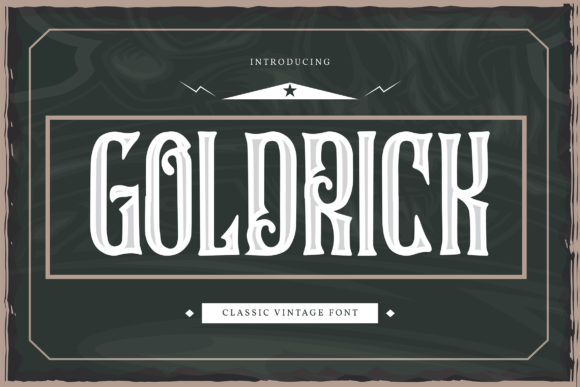
To understand the value of Goldrick, one must first look past its surface-level "vintage" label. While it certainly evokes the charm of early 20th-century advertising and classic serif traditions, its true power lies in its versatility as a display font. Unlike body text fonts that prioritize readability over long periods, display fonts like Goldrick are designed to make a statement. They are meant to be seen, felt, and remembered.
Goldrick is engineered to provide a bold touch to any project. Whether it is used for product labels, packaging, or high-impact digital headers, it brings a sense of authority and heritage that generic modern fonts often lack. For professionals and creators, this distinction is crucial. In a crowded marketplace, standing out requires more than just clarity; it requires identity. Goldrick provides that identity through its robust structure and classic proportions.
The Technical Advantage of PUA Encoding
For the technically inclined designer or developer, the functionality of a font is just as important as its look. This is where Goldrick offers a significant practical advantage: it is PUA encoded. The Private Use Area (PUA) of Unicode allows for the inclusion of additional glyphs, swashes, and special characters without conflicting with standard encoding standards.
What does this mean for your workflow? It means you can access all of the glyphs and swashes with ease. Instead of relying on third-party ligature tools or complex CSS hacks to achieve unique typographic flourishes, Goldrick integrates these elements directly into the font file. This streamlines the design process, allowing marketers and freelancers to create sophisticated, customized layouts quickly. The ability to toggle between standard letters and ornate swashes gives designers granular control over the visual rhythm of their work, enhancing the overall premium feel of the final output.
Why Now? Connecting Vintage Style to Modern Trends
You might wonder why there is a renewed interest in vintage styles at a time when technology is pushing us toward futuristic minimalism. The correlation is actually quite strong. As digital interfaces become increasingly homogenized—where every app looks similar and every website follows the same grid systems—consumers are developing a craving for something tangible and human. This is often referred to as the "analog revival."
Authenticity in Branding
Modern consumers, particularly Millennials and Gen Z, value authenticity above almost all other brand attributes. They are skeptical of overly polished, corporate-sounding messaging. Instead, they gravitate towards brands that tell a story, that have roots, and that feel handcrafted. Goldrick taps into this psychological desire for authenticity. By using a font that references the past, brands can subtly signal stability, craftsmanship, and tradition.
Consider the rise of artisanal products, from craft coffee to small-batch cosmetics. These industries thrive on the narrative of quality and care. A label printed in a stark, cold sans-serif might communicate efficiency, but a label set in Goldrick communicates heritage. It suggests that the product inside has been made with the same care and attention to detail as the typography surrounding it. For entrepreneurs and business owners, this alignment between visual style and brand values is not just cosmetic; it is a strategic asset.
The Tactile Experience in a Digital Age
Even in digital spaces, we see the influence of this trend. Web design is moving away from flat, two-dimensional aesthetics toward designs that simulate depth, texture, and material. This is known as "neumorphism" or "glassmorphism," but it also extends to typography. Using a font with the weight and presence of Goldrick on a website header creates a visual anchor. It breaks the monotony of thin, light weights and invites the user to pause and engage. It adds a layer of sophistication that elevates the perceived value of the content.
Practical Applications Across Industries
The versatility of Goldrick makes it suitable for a wide range of professional applications. Let’s explore how different sectors are leveraging this typeface to meet changing consumer expectations.
- Food and Beverage: In the competitive food industry, packaging is the first point of contact. Goldrick’s bold, classic style is perfect for beer labels, artisanal chocolate wrappers, and organic grocery brands. It conveys trustworthiness and quality, helping products stand out on crowded shelves.
- Fashion and Apparel: Luxury and heritage fashion brands often use serif and display fonts to evoke a sense of timeless elegance. Goldrick can be used for lookbook headers, campaign slogans, and even embroidery details on garments, bridging the gap between traditional tailoring and modern marketing.
- Events and Hospitality: For wedding invitations, concert posters, or hotel branding, Goldrick adds a touch of glamour and formality. Its swash capabilities allow for elegant monograms and decorative elements that enhance the invitation’s perceived value.
- Tech and Startups: Even in the tech sector, where minimalism reigns, there is a growing niche for "human-centered" design. Startups focusing on wellness, education, or community building may use Goldrick to soften their image and appear more approachable and grounded.
Optimizing Your Workflow with Goldrick
For freelancers and agencies, efficiency is key. The PUA encoding of Goldrick supports a smoother workflow by reducing the need for external plugins or manual glyph manipulation. When designing for clients who require custom branding packages, having a font that includes extensive swash options within its own character set saves valuable time. It allows for rapid prototyping of logos and brand assets.
Moreover, because Goldrick is a display font, it is best used strategically. Overusing bold, heavy typefaces can lead to visual fatigue. The most effective use cases involve pairing Goldrick with lighter, simpler fonts for body text. This contrast creates hierarchy and guides the reader’s eye. For example, using Goldrick for headlines and a clean sans-serif for paragraphs ensures that the message is both impactful and readable. This balance is essential for maintaining engagement across both print and digital media.
The Future of Typographic Identity
As we look ahead, the role of typography in brand identity will only become more critical. With AI-generated content flooding the internet, human-centric design elements will serve as a differentiator. Fonts with soul, history, and distinct character will be prized commodities. Goldrick represents this shift. It is not just a tool for laying out text; it is a vehicle for storytelling.
The market is responding to a desire for connection. Consumers want to feel a personal connection to the brands they support. By choosing a font like Goldrick, businesses are making a conscious decision to align themselves with values of craftsmanship, tradition, and boldness. This is a forward-looking strategy that acknowledges the enduring power of classic design principles in a rapidly evolving technological landscape.
Embracing the Bold Touch
In conclusion, Goldrick is more than just a vintage-styled display font. It is a response to the current cultural and market demand for authenticity and distinctiveness. Its PUA encoding ensures technical ease, while its classic aesthetic provides emotional resonance. For professionals, creators, and entrepreneurs, adopting Goldrick is a way to inject personality and prestige into their work.
Whether you are rebranding a legacy company, launching a new startup, or simply looking to elevate your freelance portfolio, considering the impact of typography is essential. Goldrick offers a powerful solution for those seeking to make a bold, lasting impression. In a world of noise, it provides a clear, confident voice. By integrating such thoughtful design choices into your workflow, you not only enhance the visual appeal of your projects but also strengthen the narrative power of your brand. The future of design is not about abandoning the past, but about reinterpreting it with modern precision and purpose.